

Glass vs Acrylic Aquarium: Which Material Fits You?
Glass and acrylic tanks look alike when full, but they differ in weight, scratching, clarity and what they need underneath. The figures below come from maker pages, mostly for sheet material and not for whole tanks, so each section says whose numbers they are. Whichever you choose, the weight of the water inside does not change.
Glass tank: the better choice if…
- You want a surface that resists scratches from scrapers and cleaning pads.
- You plan to put the tank on an open-top stand and keep it there.
- You want the tank price to stay low, as one tank maker says glass tends to.
Acrylic tank: the better choice if…
- You need a lighter tank and will check the listed empty weight.
- You want a curved or custom shape, or drilled holes for plumbing.
- You can support the whole base and will follow the maker's cleaning advice.
Jump to section
At a glance
| Point | Glass tank | Acrylic tank |
|---|---|---|
| Weight | Heavier sheet: 2.9 lb/sq ft at 1/4 in | Lighter sheet: 1.5 lb/sq ft at 1/4 in |
| Clarity | Edges look grey or green; low-iron helps | Maker: near-zero visible-light absorption |
| Scratch resistance | Does not scratch easily (Aqueon) | Scratches more easily; may yellow |
| Impact resistance | Plate glass 1.0 ft-lb; tempered 15.5-29.1 | Acrylic 18.1 ft-lb; large pieces |
| Shape options | Fewer shapes | Curves; easy to drill |
| Price | Tends to cost less (Aqueon) | No sourced figures |
| Stand needs | Open-top stand can work | Entire bottom must be supported |
Weight
ACRYLITE, a maker of acrylic sheet, says an acrylic sheet weighs half as much as a glass sheet of the same size and thickness: at 1/4 in thick, acrylic is 1.5 lb per sq ft and glass is 2.9 lb per sq ft (ACRYLITE). Aqueon, a tank maker, also says acrylic tanks are lighter (Aqueon FAQ). Those are sheet figures from an acrylic maker, so for a real tank use the empty weight on the listing. Compare it in the Empty weight column of our fish tank guide.
Clarity
The sheet maker says colorless acrylic has "essentially zero absorption of visible light", while plate glass absorbs 2% at 0.118 in thick, 8% at 0.500 in and 11% at 0.750 in, and its edges look grey or green (ACRYLITE). That is the maker's own data. Vitro says its low-iron glass transmits 90% of visible light at 1/2 in, 7 percent more than ordinary clear glass, and avoids the green look as thickness increases (Vitro). Vitro's figures are for architectural glass, not an aquarium brand, but they explain why listings say low-iron.
Scratch resistance
ACRYLITE says acrylic is "not as hard as nor as chemically resistant as glass" and scratches more easily. After 100 cycles of an abrasion test, plate glass showed 0.23% haze and uncoated acrylic 26.88% (ACRYLITE). Aqueon says glass tanks "do not scratch easily", while acrylic tanks "scratch more easily and some may yellow over time" (Aqueon FAQ). A Canadian conservation note agrees that glass is normally very resistant to scratching (CCI). For cleaning rules, see the FAQ below.
Impact resistance
In a falling-ball test on 1/4 in sheets, plate glass withstood 1.0 ft-lb, tempered glass 15.5 to 29.1 ft-lb and acrylic 18.1 ft-lb. When acrylic breaks, it usually cracks into large pieces with edges much less sharp than broken glass (ACRYLITE). These are an acrylic maker's sheet results. Whole tanks use thicker panels built differently, so do not stretch the numbers to a finished tank. Check the thickness and warranty on the listing.
Shape options
ACRYLITE says acrylic can be bent cold into gentle curves or heat-formed into "flowing curves and shapes" (ACRYLITE). Aqueon says acrylic tanks come in "a wider range of shapes than glass aquariums" and are easy to drill for custom plumbing (Aqueon FAQ). If you want a standard box shape, both materials are available. Compare the Dimensions column on our fish tank guide for footprint and height.
Price
Aqueon says glass aquariums "tend to be more affordable, especially in sizes less than 300 gallons" (Aqueon FAQ). It is a tank maker and gives no figures, and we have no independent price comparison, so we do not rank the two by cost. Compare current prices on Amazon for tanks of the same volume, and note what each includes, such as a lid, light, filter or stand. Our picks pages link to Amazon, where each tank's current price is shown.
Stand needs
Aqueon says a filled aquarium weighs about 10 lb per gallon including fish, substrate, decor and water, so a 20-gallon tank is about 200 lb, and most household furniture will likely hold only tanks of 5 gallons or less (Aqueon FAQ). Water alone is about 8.3 lb per gallon (USGS), derived. Aqueon says an acrylic tank's entire bottom must be supported to prevent bowing and separation of seams, while glass tanks can sit on open-top stands, which cost less.
Which should you buy?
If you want a tank that resists scratches and sits on an open-top stand, start with glass and read our fish tank guide. If weight, curves or custom plumbing matter more, look at acrylic, and check how a starter kit supports the base. Either way, compare the listed empty weight, the warranty and the stand rating, and follow the tank maker's care advice.
Alternatives
Not sure about size yet? Read how to set up a fish tank, or look at a smaller betta tank.
FAQ
Is an acrylic tank really lighter?
The sheet maker says acrylic weighs half as much as glass of the same size and thickness (ACRYLITE), and Aqueon agrees that acrylic tanks are lighter (Aqueon FAQ). Use each tank's listed empty weight for the real difference.
How do I clean an acrylic tank without scratching it?
The sheet maker says not to use window-cleaning sprays, kitchen scouring compounds or solvents such as acetone, and warns that dry or gritty cloths can scratch acrylic. Fine scratches can be hand-polished out (ACRYLITE care). A Canadian conservation note adds that many household cleaners contain abrasives (CCI). This is advice for acrylic sheet, so follow your tank maker's care instructions first.
Is a scratched glass tank easy to repair?
A Canadian conservation note says a scratched glass surface is very laborious to restore (CCI). Glass's advantage is that it resists scratching to begin with, so avoid abrasive pads either way.
Does the material change the weight of the water?
No. Water weighs about 8.3 lb per gallon in any tank (USGS), derived.
Related
-
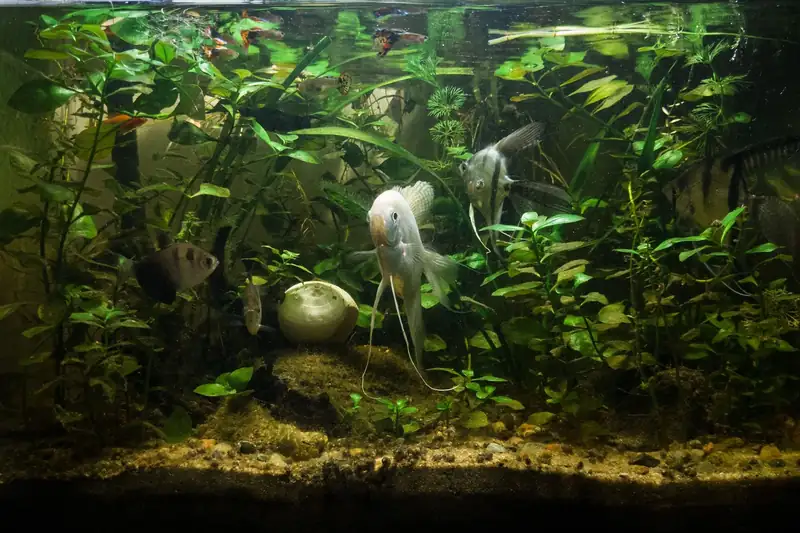
Buying guide
Best Fish Tanks (20 Gallons and Up)
Footprint, glass, rimless design and weight, side by side for larger tanks.
-
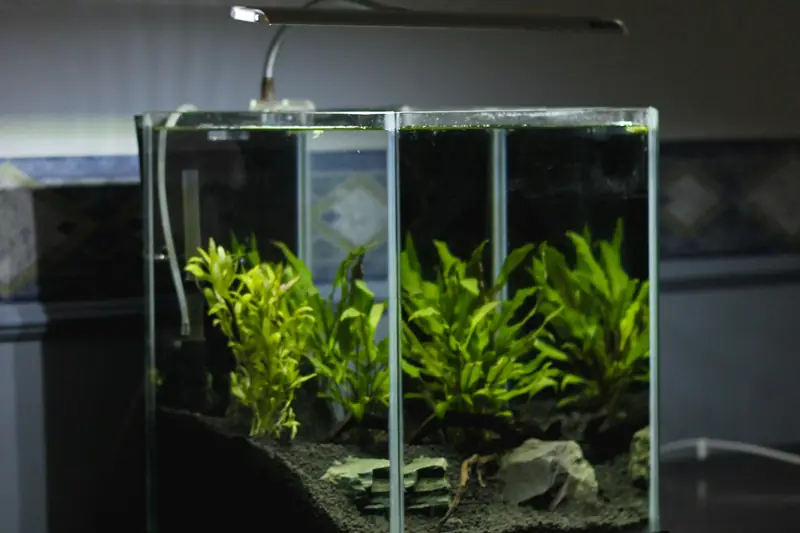
Buying guide
Best Aquarium Starter Kits for Beginners
Volume, filter type, heater and lid, side by side for first-time owners.
-
-
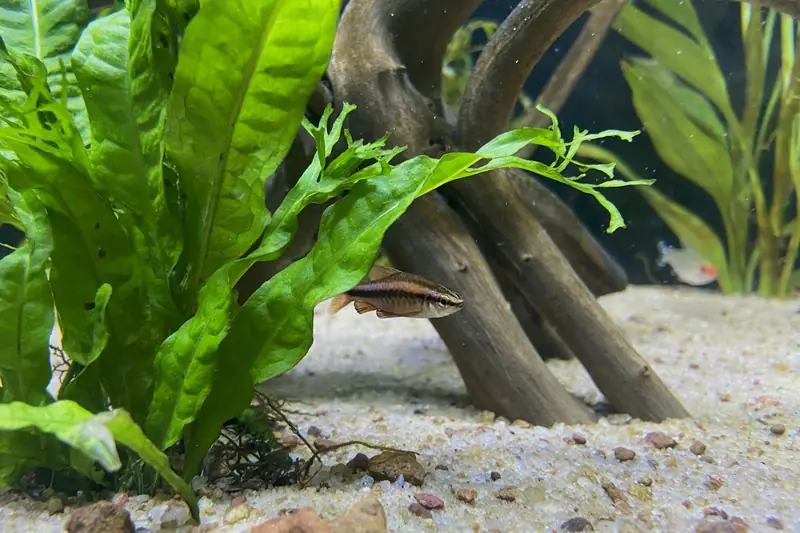
Guide
How to Set Up a Fish Tank: A Step-by-Step Beginner's Guide
Stand, water treatment, filter, heater and tests, in the order that keeps fish safe.
Get the First Fish Tank Checklist
A printable 8-point checklist for a new tank: stand weight, water treatment, filter, heater safety, temperature, tests and cleanup. Free.