How to Set Up a Fish Tank: A Step-by-Step Beginner's Guide
Stand, water treatment, filter, heater and tests, in the order that keeps fish safe.
Quick answer
Set up the stand first: water weighs about 8.3 lb per gallon, so a 20-gallon tank holds roughly 166 lb of water before gravel and glass (USGS, derived). Treat tap water with a product that removes chloramine, run the filter and heater, and add fish only when ammonia and nitrite both read zero.
Jump to section
Pick the spot and the stand (water is heavy)
Choose where the tank goes before you buy it. A full tank cannot be moved, and its weight is the main thing that catches new owners out.
Water weighs about 62.3 lb per cubic foot at 70°F, according to the USGS table. With 7.48 gallons per cubic foot, that works out to about 8.3 lb per gallon, so a 20-gallon tank holds roughly 166 lb of water before substrate and glass (USGS). The per-gallon figure is our arithmetic from the table, so treat it as a close estimate.
A practical spot is a level, sturdy surface near an outlet, out of direct sun and away from heating vents. Use a stand rated for the full weight. Our guides to fish tanks and starter kits list volume and empty weight so you can add them up.
Leave room around the tank, too. You need space to open the lid, reach the filter and run a siphon hose to a drain. Check that an outlet is within reach so no cord has to stretch across the room, and plan where each cord will hang so the drip loops later have somewhere to go.
Rinse, place substrate and decor
Rinse the tank, substrate and decor with plain water before anything goes in. Put the substrate in first, then decor, rocks and any plants.
Arrange the decor so you can still reach every corner with your hand or a siphon. Leave space behind the filter and around the heater. Your gravel vacuum will need to reach the substrate later, so avoid packing decor tightly against the glass.
If you are setting up a betta tank, see our betta tank guide for room for a heater and gentle flow.
Take your time here, because this is the last chance to move things easily. Once water is in, every adjustment means getting your hands wet, and every adjustment needs an unplugged heater and filter. Step back and look at the layout from the front and the side before you fill.
Treat tap water: chlorine vs chloramine
Tap water is treated for people, not for fish. UF/IFAS says that for fish and aquatic life, "even the slightest trace of chlorine can prove fatal" (UF/IFAS).
Chloramine is a related disinfectant used by many water utilities. It is toxic to fish, and Nebraska Extension says to keep chloramine residuals in fish water below 0.1 ppm (Nebraska Extension). Chloramine also breaks down into ammonia, which can be toxic at high levels.
You cannot rely on letting the water sit. Twenty-four hours of vigorous aeration greatly reduces chlorine, but chloramine levels will "probably not be zero" (UF/IFAS). Nebraska Extension adds that reverse osmosis, water softeners and boiling do not remove chloramine effectively, and that waiting can take weeks. Use a dechloramination product or high-quality granular activated carbon. Our water conditioner guide compares products.
Install the filter and heater (unplugged)
Put the filter and heater in place while they are unplugged. Position the filter so that water flows across the tank, and put the heater where water moves past it. Keep both clear of decor.
For a heater, choose the model by the maker's rated tank size. Our heater guide explains what to compare, and the heater safety guide covers submersion lines, drip loops and removal. For filters, compare the rated tank size and media room in our filter guide; the biofilter is the long-term control for ammonia (UF/IFAS).
Read the filter's manual for priming and start-up. Follow the maker's start-up steps exactly, since priming differs from filter to filter. Keep the manuals in a drawer near the tank so they are easy to find when you need them for cleaning.
Fill, plug in, wait for temperature
Fill the tank with water you have treated. Pour onto a plate or a bag set on the substrate so you do not dig a crater. Check the heater is under water to its minimum line before you plug it in.
Then plug in the filter, heater and light, each with a drip loop in its cord. Fluval says to allow up to 12 hours for the heater to reach the set temperature before adjusting the dial, and to check the result with an accurate thermometer before adding fish (Fluval manual). That advice is for one model, but a thermometer is a sound check on any heater.
While you wait for the temperature, check for leaks around the tank seams, the filter hoses and the stand. Look again after a few hours and again the next day. A slow leak is easier to deal with now than after fish are in.
Start the nitrogen cycle
A new tank has no bacteria to process waste, so it must be cycled before fish can live in it. A new biofilter takes about six to eight weeks to establish, and you should test ammonia at least weekly (UF/IFAS).
Our guide on how to cycle a fish tank explains the two bacteria steps and how to read your tests during the process. For now, remember the aim: ammonia at zero and no nitrite before the first fish goes in.
Test before adding fish
Use a test kit before any fish go in. Ammonia is colorless and odorless even at toxic levels, so a test is the only way to see it (UF/IFAS). Our test kit guide compares formats and what each kit covers.
For how to read the numbers, see aquarium water testing.
If you have followed the steps in order, the tests are a final check rather than a surprise. When ammonia and nitrite both read zero, the tank is ready for its first fish. If either one reads above zero, keep waiting and keep testing; the cycling guide explains why.
Setup checklist
Print this list or tape it near the tank. Each line is covered above.
- Stand rated for the full weight; water is about 8.3 lb per gallon (USGS, derived).
- Substrate and decor rinsed with plain water.
- Tap water treated with a product that removes chloramine (Nebraska Extension).
- Filter and heater installed while unplugged (Fluval manual).
- Heater submerged to its minimum line, with a drip loop on every cord.
- Temperature checked with a thermometer after up to 12 hours.
- Cycle started, with ammonia tested at least weekly (UF/IFAS).
- Ammonia and nitrite both at zero before the first fish.
Gear that helps
-
Best Aquarium Starter Kits for Beginners
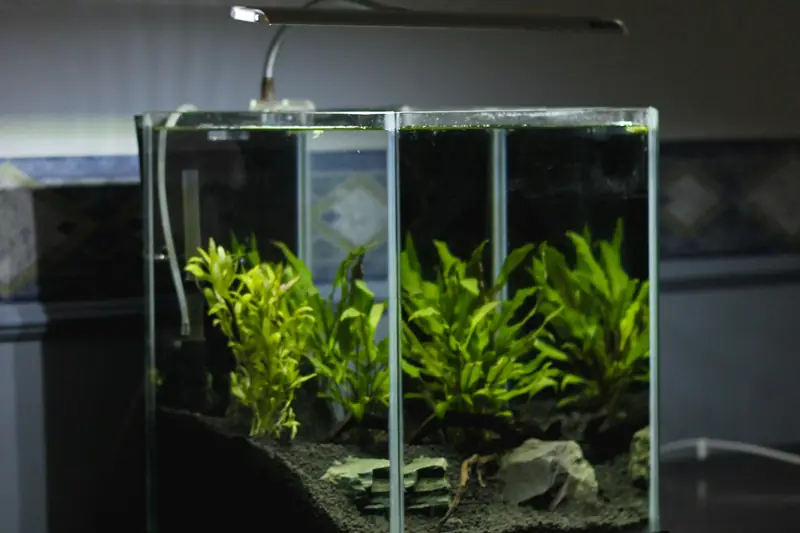
A kit bundles the tank with a filter, light and lid, so you can start with one box.
-
Best Water Conditioners for Aquariums
Tap water must be treated before it goes in the tank, and chloramine needs a product that removes it.
-
Best Aquarium Heaters
Match a heater to your tank using the maker's rated tank size, then set it up with a drip loop.
FAQ
How heavy is a 20-gallon tank?
The water alone is roughly 166 lb, using about 8.3 lb per gallon, before substrate and glass (USGS, derived figure).
Can I use tap water straight from the faucet?
Not without treatment. Chloramines are toxic to fish, and chemicals that remove only chlorine will not remove them (Nebraska Extension).
How long should the heater run before I add fish?
Fluval says to allow up to 12 hours for its heater to reach the set temperature, then verify with an accurate thermometer (Fluval manual).
Related
-
Buying guide
Best Aquarium Starter Kits for Beginners
Volume, filter type, heater and lid, side by side for first-time owners.
-
Buying guide
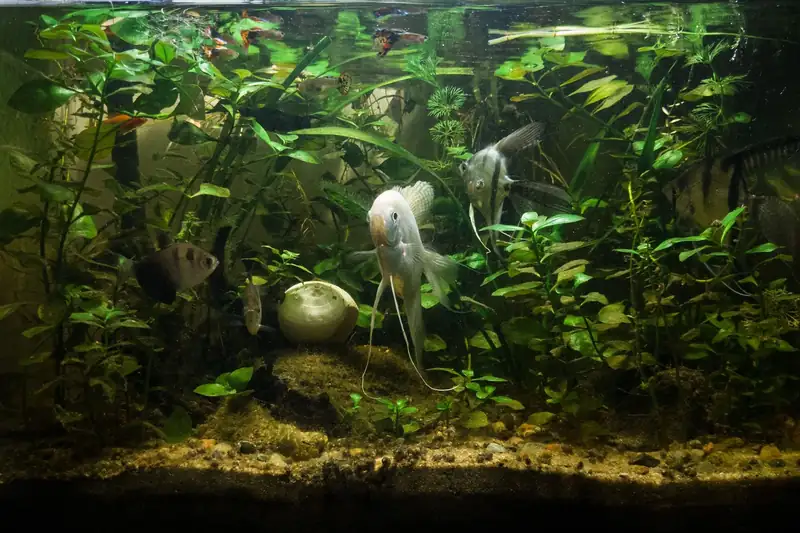
Best Fish Tanks (20 Gallons and Up)
Footprint, glass, rimless design and weight, side by side for larger tanks.
-
-
Buying guide
Best Aquarium Heaters
Wattage, rated tank size, build and run-dry protection, side by side.
-
Guide
How to Cycle a Fish Tank: The Nitrogen Cycle Made Simple
Ammonia to nitrite to nitrate, how long it takes and when fish can go in.
-
Guide
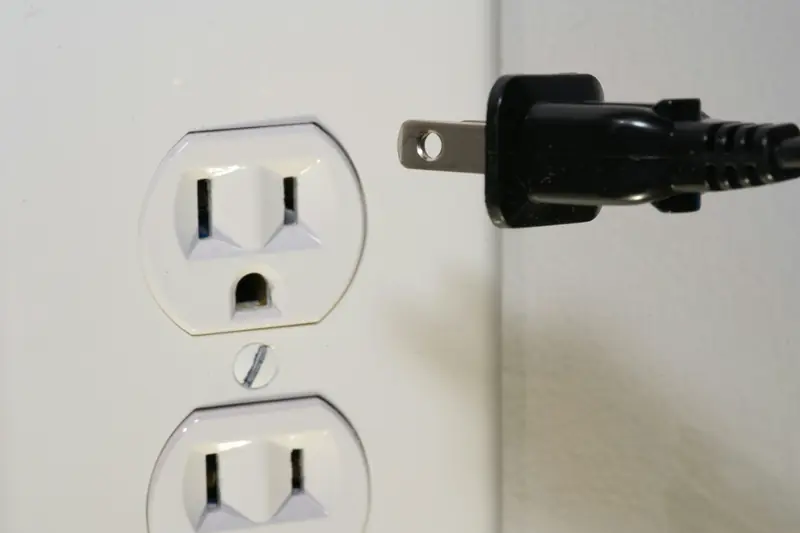
Aquarium Heater Setup and Electrical Safety
Unplugging, submersion lines, drip loops and the 30-minute removal rule.

Get the First Fish Tank Checklist
A printable 8-point checklist for a new tank: stand weight, water treatment, filter, heater safety, temperature, tests and cleanup. Free.