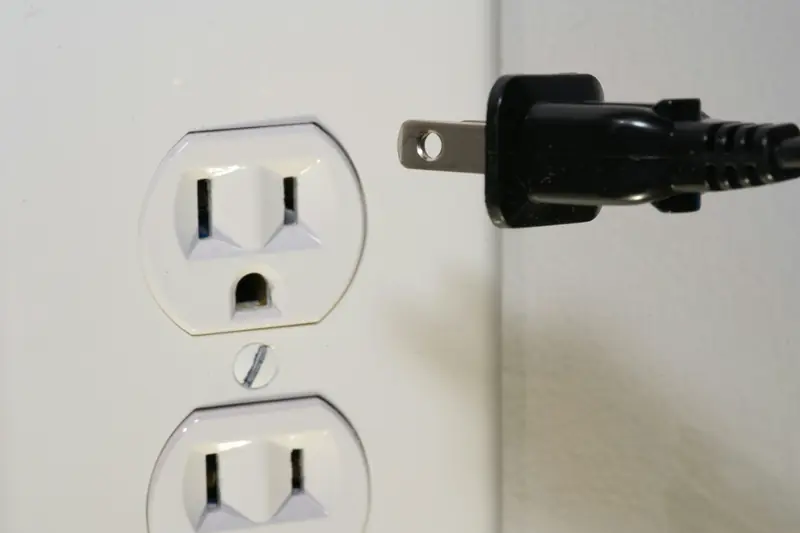
Aquarium Heater Setup and Electrical Safety
Unplugging, submersion lines, drip loops and the 30-minute removal rule.
Quick answer
Always unplug every aquarium appliance before your hands go in the water. Keep the heater submerged to its minimum line, leave a drip loop in the cord, and let it cool for at least 30 minutes before lifting it out (Fluval manual). These rules come from one maker's manual, so read the manual for your own model too.
Jump to section
Unplug before hands go in the water
Water and mains electricity do not mix, and an aquarium puts both in the same room. The most important rule is also the simplest.
That covers the heater, the filter, the light and any pump. A power strip with a single switch makes this easier, because one flip cuts everything. Make it a habit before every water change, every cleaning and every time you reposition decor.
We use Fluval's M heater manual as our source for this guide. It is a manual for one model, so a few details, such as depth limits and the heating gap, are specific to it. Where that applies, we say so. Your own heater's manual comes first.
Think about who else uses the tank. If a family member or a guest might reach into the water, make sure they know the rule. A small note on the stand or the lid is enough: unplug first. This is especially useful if you have children in the house, because the Fluval manual also says to supervise them around the heater.
Submersion lines: minimum and maximum
A heater is built to work underwater. Fluval's manual says the heater must be submerged at least to its MIN water level mark, and for that model not deeper than 100 cm. It also says the heater "must never operate outside of water" (Fluval manual).
The practical lesson is to check the mark whenever you lower the water. Evaporation also lowers the level over time. If you top up regularly, look at the heater each time.
When you shop, our heater guide lists length or minimum water level as a spec, so you can see whether a model fits the depth of your tank.
Your heater may mark its limits differently from the model described here, so check the exact marking on your heater and in its manual. If your tank is shallow, check that the heater still reaches its minimum mark when the water is at its normal level.
Drip loops and wet plugs
A drip loop is a dip in the cord below the outlet. It means that water running down the cord drips off at the lowest point, rather than reaching the socket (Fluval manual).
Make the loop when you install the appliance, not later. Check it again after you move the tank stand, lights or cords. Our aquarium light guide covers the same rule for light fixtures.
A wet plug is rare when the loop is right, but it is worth knowing what to do. Do not grab the plug with wet hands, and do not pull it from a wet outlet. Turn off the fuse or breaker first. After the power is off, unplug, dry what you can, and check for water before you restore power.
Warm-up time and checking with a thermometer
A heater does not bring a tank to temperature at once. Fluval says to allow up to 12 hours to reach the set temperature before adjusting the dial. A separate thermometer is the check. Do not rely on the heater's dial alone, and verify the temperature before adding fish (Fluval manual). Our setup guide puts this step in order with the others.
Fluval also says this model is designed to hold temperature when the gap between room and set temperature is under 10°C (18°F). Cold rooms, no lid or strong flow may need more wattage. That is a statement about one model. For any other heater, use the maker's rated tank size, which our guide shows in the spec table.
When you check, read the thermometer at the same time each day for the first week. A steady line tells you the heater and the room are working together. If the number keeps drifting, look at the dial, the room temperature and the water level before you assume the heater is faulty.
Removing a heater (the 30-minute rule)
Heaters get hot, and a hot heater lifted out of the water can burn you or crack.
A simple routine for water changes:
- Unplug every appliance.
- Wait at least 30 minutes if the heater has been on.
- Lower the water, keeping the heater covered, or lift it out only after it has cooled.
- Refill, check the minimum line, then plug in again.
Damaged cords and when to replace
A heater is not a repairable appliance. Fluval says a damaged cord cannot be replaced, so the heater should be discarded. It also says never to cut the cord (Fluval manual).
The same manual says the heater is for indoor use only, and is not for pools, ponds or bathrooms. It also says to supervise children. If a heater is damaged, check the cord, the glass or body and the plug, and retire it rather than patch it.
Look over each heater when you do a water change. Check the cord for cuts and kinks, the body for cracks and the plug for corrosion. A heater that looks worn is a cheap thing to replace compared with the risk of keeping it. Our heater guide shows the specs to compare when you buy the next one, including run-dry protection as the maker states it.
Stable temperatures
A steady temperature is easier on fish than a swinging one. A University of Florida teaching module advises no more than a 5°F temperature swing in 24 hours for its system (UF teaching module). It describes a classroom setup, so treat it as general guidance.
To keep temperature steady, keep the tank out of direct sun and away from vents, use a lid, and check your thermometer every day. If your heater may be undersized, see the maker's rated tank size for the model, and our guides to starter kits and betta tanks show which come with a heater.
Gear that helps
-
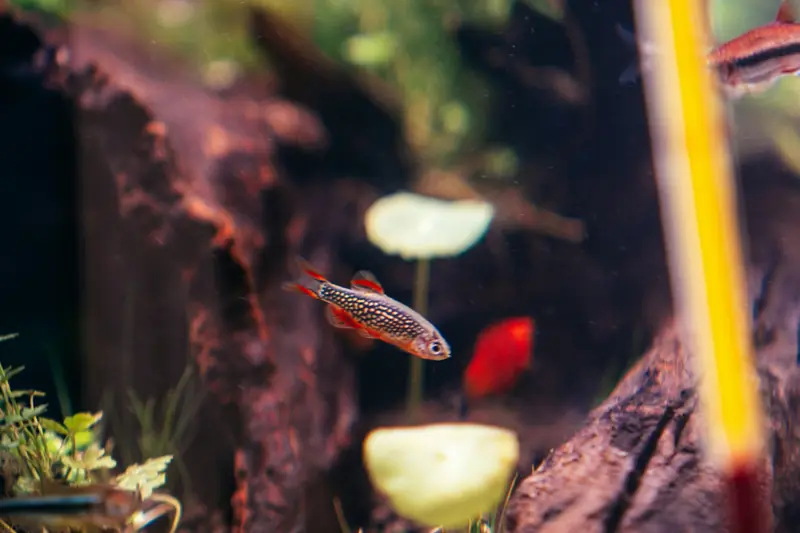
Best Aquarium Heaters
Compare wattage, rated tank size, body material and run-dry protection.
-
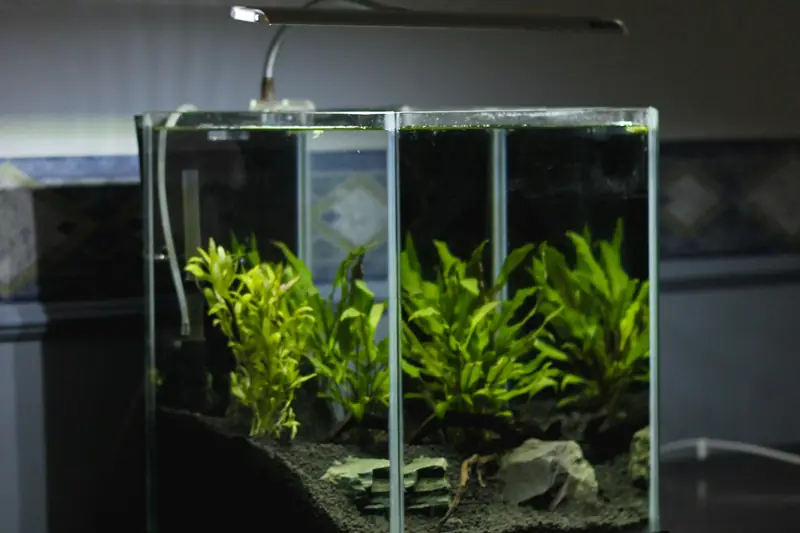
Best Aquarium Starter Kits for Beginners
Check whether a kit includes a heater, and what its rated tank size is.
-
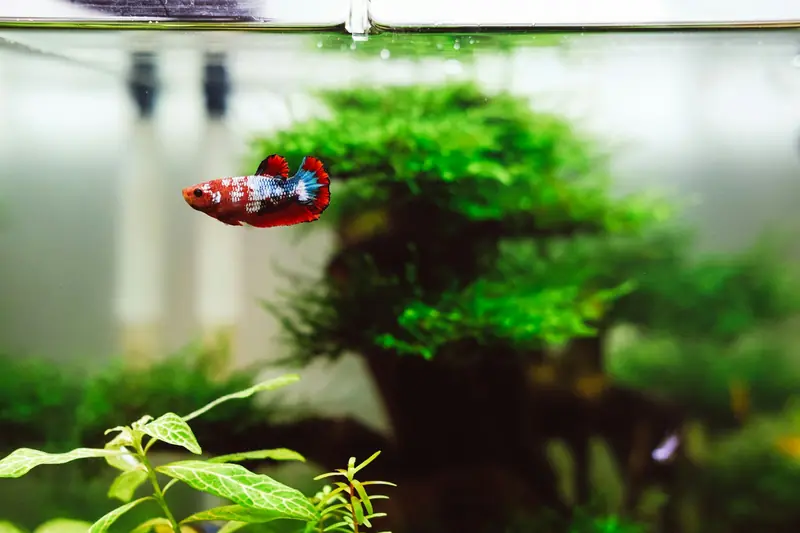
Best Betta Fish Tanks
Betta tanks need room for a heater and a separate thermometer.
FAQ
How long should I wait before removing a heater?
Unplug it, then let it cool for at least 30 minutes before lifting it out of the water (Fluval manual).
What is a drip loop?
A loop of cord below the outlet, so water running down the cord drips off instead of reaching the socket (Fluval manual).
Can I repair a heater with a damaged cord?
Fluval says a damaged cord cannot be replaced, so the heater should be discarded, and the cord should never be cut (Fluval manual).
Related
-
Buying guide
Best Aquarium Heaters
Wattage, rated tank size, build and run-dry protection, side by side.
-
Buying guide
Best Aquarium Starter Kits for Beginners
Volume, filter type, heater and lid, side by side for first-time owners.
-
-
Buying guide
Best Aquarium Lights (Fish-Only and Planted)
Tank fit, output, spectrum and controls for fish-only and planted tanks.
-
Guide
How to Set Up a Fish Tank: A Step-by-Step Beginner's Guide
Stand, water treatment, filter, heater and tests, in the order that keeps fish safe.
-
Guide
How to Cycle a Fish Tank: The Nitrogen Cycle Made Simple
Ammonia to nitrite to nitrate, how long it takes and when fish can go in.
Get the First Fish Tank Checklist
A printable 8-point checklist for a new tank: stand weight, water treatment, filter, heater safety, temperature, tests and cleanup. Free.